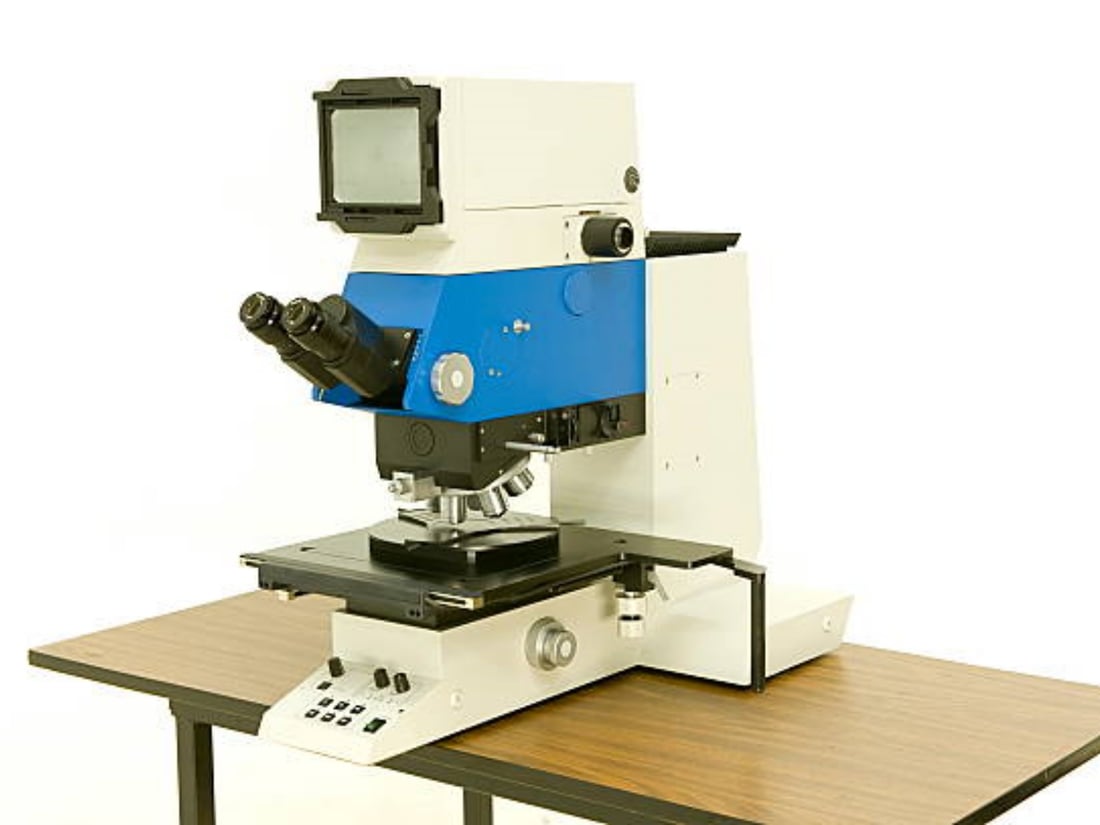
The LV-S01-M laser vibrometer is an advanced optical instrument designed for the precise measurement of vibration and velocity in various industrial, scientific, and engineering contexts. Utilizing laser Doppler technology, this device enables non-contact measurement, making it ideal for delicate or hazardous environments. The LV-S01-M laser vibrometer offers high sensitivity and accuracy, distinguishing it as a preferred tool in fields requiring fine vibration analysis.
Key Features and Specifications
The LV-S01-M laser vibrometer boasts a compact design coupled with a high-frequency detection range, supporting measurements from a few hertz up to several megahertz. Its optical system delivers measurements with sub-micron accuracy and rapid data acquisition. The device is equipped with built-in signal processing capabilities and customizable software interfaces, allowing seamless integration into existing experimental setups or manufacturing lines.
Principle of Operation
Operating on the Doppler effect, the LV-S01-M laser vibrometer projects a laser beam onto the target surface. When the surface vibrates, the reflected light undergoes frequency shifts proportional to the velocity of vibration. These shifts are detected, converted into electrical signals, and processed to quantify displacement and velocity. This non-contact method avoids mass loading or interference with the object under test, preserving measurement integrity.
Applications in Industrial Equipment Monitoring
Industries such as automotive, aerospace, and manufacturing widely employ the LV-S01-M laser vibrometer for condition monitoring. It accurately detects mechanical faults like imbalances, misalignments, and bearing defects by analyzing the vibrational patterns of rotating or reciprocating components. Early detection facilitated by the LV-S01-M laser vibrometer helps reduce downtime and maintenance costs.
Role in Structural Health Monitoring
The LV-S01-M laser vibrometer plays a crucial role in structural health monitoring by assessing vibrations in bridges, buildings, and aerospace structures. Engineers use it to evaluate natural frequencies, damping characteristics, and modal shapes, contributing to safety assessments and lifecycle management. The device’s precision ensures reliable data even in large-scale, complex infrastructures.
Advantages of Non-contact Measurement
A key advantage of the LV-S01-M laser vibrometer lies in its non-contact approach, eliminating physical attachments that might affect vibration characteristics. This feature makes it especially suitable for high-temperature or rotating objects, delicate materials, and moving targets. Additionally, non-contact measurements reduce wear and maintenance on sensors themselves, enhancing operational reliability.
Integration with Data Acquisition Systems
The LV-S01-M laser vibrometer is compatible with various data acquisition and analysis systems, enabling real-time monitoring and detailed post-processing of vibration data. Its digital output interfaces can integrate with software platforms for automated diagnostics, frequency analysis, and trend monitoring. This interoperability broadens its application scope across research and industrial environments.
User Interface and Software Functionality
Equipped with a user-friendly interface, the LV-S01-M laser vibrometer offers intuitive operation through touchscreen controls and customizable parameters. The accompanying software provides visualization tools, signal filtering, and storage options, facilitating the efficient interpretation of complex vibration data. These features reduce the learning curve and operational errors for new users.
Comparative Advantages over Conventional Vibrometers
Compared to traditional contact sensors like accelerometers or strain gauges, the LV-S01-M laser vibrometer stands out in terms of spatial resolution, ease of use, and safety. By avoiding physical contact, it eliminates mass loading effects and the risk of sensor damage. Its laser-based measurement also allows for remote sensing in hazardous or confined spaces where traditional sensors cannot be deployed.
Future Developments and Market Trends
Emerging trends indicate that the LV-S01-M laser vibrometer is likely to incorporate enhanced miniaturization, wireless connectivity, and AI-driven analytics. Developments in laser technology will improve sensitivity and range, supporting more diverse applications. As industries demand smarter condition monitoring tools, the LV-S01-M laser vibrometer will play a pivotal role in predictive maintenance and structural diagnostics.
Quote Inquiry
contact us