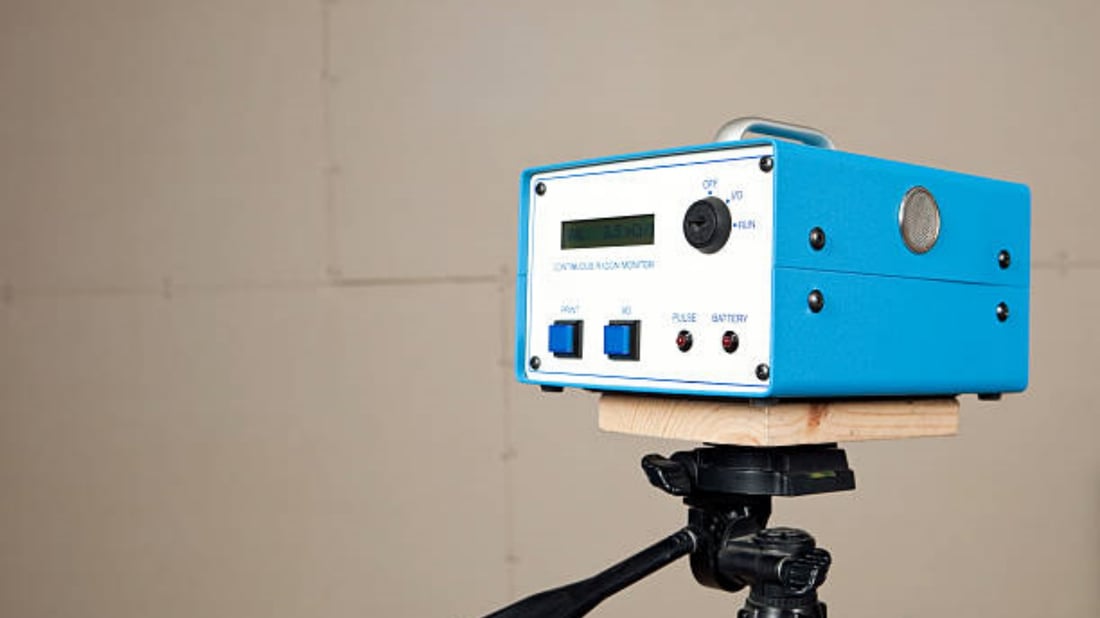
The LV-SC400-3D 3D scanning vibrometer represents a state-of-the-art sensor used for capturing precise vibrational measurements in three dimensions. Designed for non-contact vibration analysis, this advanced vibrometer employs laser scanning technology to map complex vibrational patterns on a variety of surfaces. Its innovative design has redefined how engineers and researchers perform dynamic structural analysis, making it an indispensable tool in modern industry applications.
Advanced Laser Scanning Capabilities
At the heart of the LV-SC400-3D 3D scanning vibrometer is an advanced laser scanning system that facilitates high-resolution detection of vibration across multiple axes. Unlike traditional single-point vibrometers, this device simultaneously scans expansive surfaces, providing comprehensive spatial vibration data. This capability significantly enhances efficiency by eliminating the need for multiple measurements, while delivering detailed 3D vibrational information.
Precision in 3D Vibration Measurement
Precision is a defining characteristic of the LV-SC400-3D 3D scanning vibrometer. Leveraging laser Doppler vibrometry principles, it detects minute vibrational displacements with nanometer-level sensitivity. Its three-dimensional approach captures out-of-plane and in-plane vibrations, offering an unparalleled understanding of structural dynamics that other vibrometers fail to achieve. This precision is critical for applications requiring highly accurate vibration profiles.
Applications Across Diverse Industries
The LV-SC400-3D 3D scanning vibrometer has found extensive application across numerous industries including aerospace, automotive, civil engineering, and electronics. In aerospace, it assists in stress analysis of components, while in automotive industries, it optimizes vibration behavior for enhanced vehicle comfort. Civil engineers use the device for structural health monitoring of bridges and buildings, demonstrating its versatility across sectors.
Non-Contact Measurement Advantages
One major advantage of the LV-SC400-3D 3D scanning vibrometer lies in its non-contact measurement technology. Since it uses laser beams rather than physical sensors, it prevents mass loading effects and never affects the object's natural vibration characteristics. This non-invasive approach is especially valuable for delicate or highly sensitive materials, allowing accurate assessment without compromising the test sample’s integrity.
Real-Time Data Acquisition and Visualization
Equipped with sophisticated software, the LV-SC400-3D 3D scanning vibrometer provides real-time data acquisition and visualization. Users can instantly observe vibrational modes and frequencies through dynamic 3D models and graphs. This immediate feedback loop enables rapid diagnostic assessments, accelerates testing procedures, and facilitates quick decision-making during experimental or quality control processes.
Integration with Simulation and Analysis Tools
The LV-SC400-3D 3D scanning vibrometer easily integrates with advanced numerical simulation and finite element analysis (FEA) software. By comparing experimental vibration data with simulations, engineers can validate designs, improve predictive models, and optimize structural performance. This seamless integration empowers users to blend empirical data with computational tools for comprehensive vibration analysis workflows.
User-Friendly Interface and Setup
Despite its sophisticated technology, the LV-SC400-3D 3D scanning vibrometer offers user-friendly setup and operation. Intuitive interfaces guide users through calibration and scanning procedures, reducing the learning curve for new operators. Additionally, automated alignment and measurement routines simplify complex data collection tasks, making it accessible to a wide range of technical personnel.
Robustness and Reliability in Harsh Environments
Built to withstand demanding environments, the LV-SC400-3D 3D scanning vibrometer demonstrates exceptional robustness and reliability. Its optical and mechanical components are engineered to resist vibration, dust, and temperature fluctuations common in industrial settings. This durability makes it well-suited for on-site testing where laboratory conditions are unavailable or impractical.
Future Perspectives and Technological Impact
As the LV-SC400-3D 3D scanning vibrometer technology continues to evolve, it promises to further revolutionize vibration analysis by enabling more detailed material characterization and expanding into emerging fields like nanotechnology and microelectromechanical systems (MEMS). Ongoing advancements in laser and data processing technology will likely improve accuracy and speed, making this vibrometer an increasingly vital tool for scientific and industrial innovation.
Quote Inquiry
contact us