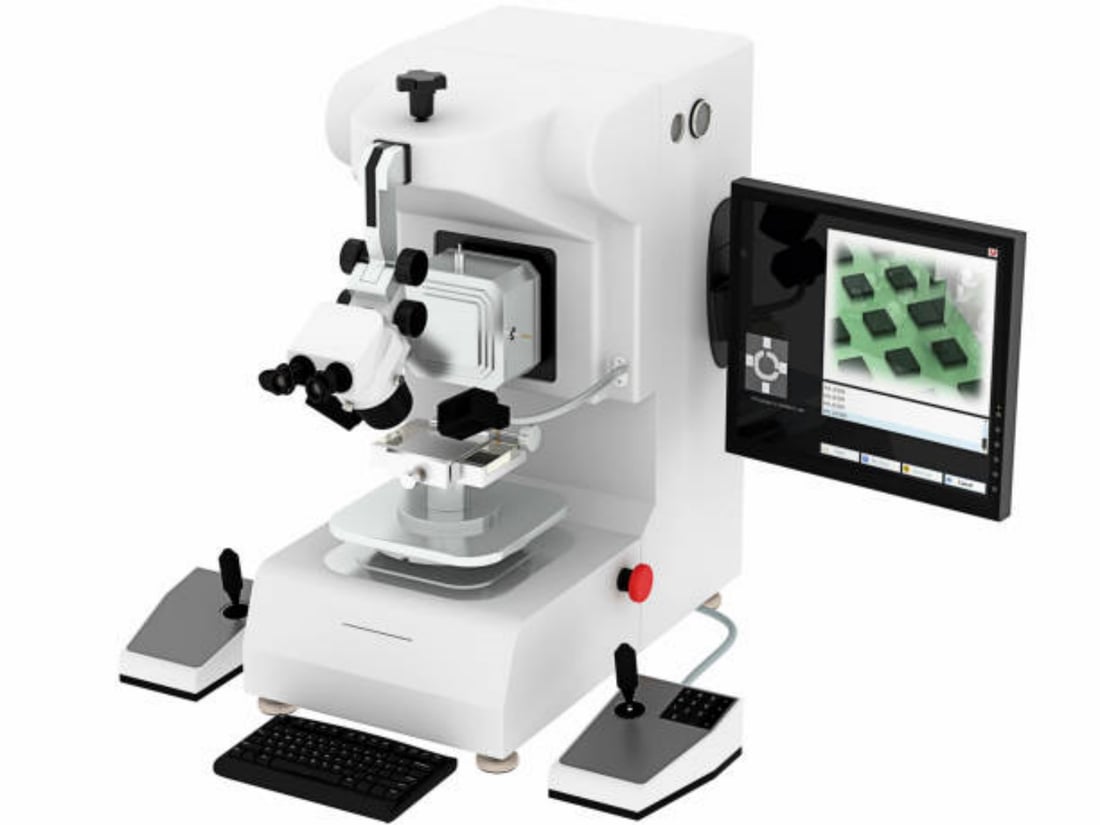
Micro vibration measurement laser vibrometers are advanced instruments designed to detect and quantify tiny vibrations in materials and structures. Unlike traditional contact methods, these laser vibrometers use non-contact laser beams to measure surface vibrations with exceptional precision. This approach is essential for applications requiring sensitivity to micro-scale oscillations, enabling accurate assessments without influencing the measured object's behavior.
Principle of Operation: Laser Doppler Vibrometry
At the core of micro vibration measurement laser vibrometers is the laser Doppler vibrometry (LDV) principle. The device emits a laser beam toward a vibrating surface, where the reflected light experiences a frequency shift proportional to the vibration velocity due to the Doppler effect. By analyzing this frequency shift, the vibrometer precisely calculates vibration amplitude and frequency, making it ideal for detecting micro-vibrations in various environments.
Advantages of Using Laser-Based Vibrometers for Micro Vibrations
Laser vibrometers excel in measuring micro vibrations because of their non-contact nature, high spatial resolution, and immunity to electromagnetic interference. These characteristics allow for accurate monitoring of delicate or moving components without physical interference, avoiding measurement distortion. Additionally, laser vibrometers can target small areas with focused laser spots, enhancing sensitivity to subtle vibrational movements.
Applications in Aerospace and Defense Industries
Micro vibration measurement laser vibrometers are critical in aerospace testing where structural integrity and performance depend on understanding micro-scale vibrations. These devices help engineers detect minute oscillations in aircraft components, satellite panels, and defense systems, ensuring reliability and safety. Their ability to perform under harsh operational conditions makes them indispensable for aerospace quality control and research.
Role in Semiconductor and Electronics Manufacturing
In semiconductor production, controlling micro vibrations is essential to maintain precision during lithography and assembly. Laser vibrometers facilitate the monitoring of wafer stages and machinery to minimize vibration-induced defects. By providing real-time vibration data, these tools support fine-tuning of manufacturing processes, resulting in higher yields and improved device reliability.
Enhancing Structural Health Monitoring with Laser Vibrometers
Structures like bridges, buildings, and industrial equipment can benefit from micro vibration measurement laser vibrometers to detect early signs of fatigue or damage. Continuous vibration monitoring enables predictive maintenance by identifying unusual vibration patterns that may signify structural issues. This proactive approach reduces downtime and extends the lifespan of critical infrastructure.
Precision in Medical Device Testing and Research
The medical field utilizes micro vibration measurement laser vibrometers to evaluate the performance of delicate instruments such as micro-pumps, ultrasonic probes, and implantable devices. Measuring microscale vibrations enables researchers to optimize device functionality and detect potential failures. The non-contact measurement is especially valuable when testing sterile or sensitive medical equipment.
Integration with Automated Systems for Industrial Quality Control
In industrial settings, micro vibration measurement laser vibrometers are often integrated into automated systems for continuous quality assurance. These systems monitor machinery vibrations to detect imbalance, misalignment, or wear before catastrophic failure occurs. Early identification through precision vibration data helps reduce maintenance costs and increase operational efficiency.
Technological Advances Improving Sensitivity and Portability
Recent innovations have enhanced the sensitivity and portability of micro vibration measurement laser vibrometers. Developments in laser sources, photodetectors, and signal processing algorithms now allow for greater measurement accuracy even at lower vibration amplitudes. Compact designs facilitate field measurements and enable use in confined or hard-to-access locations.
Future Trends and Emerging Applications
Emerging applications for micro vibration measurement laser vibrometers include integration with artificial intelligence for automated vibration pattern recognition and predictive analytics. As industries demand higher precision and faster data processing, laser vibrometers will play a pivotal role in smart manufacturing, robotics, and environmental monitoring. Continued technological improvements are expected to expand their capabilities further.
Quote Inquiry
contact us